
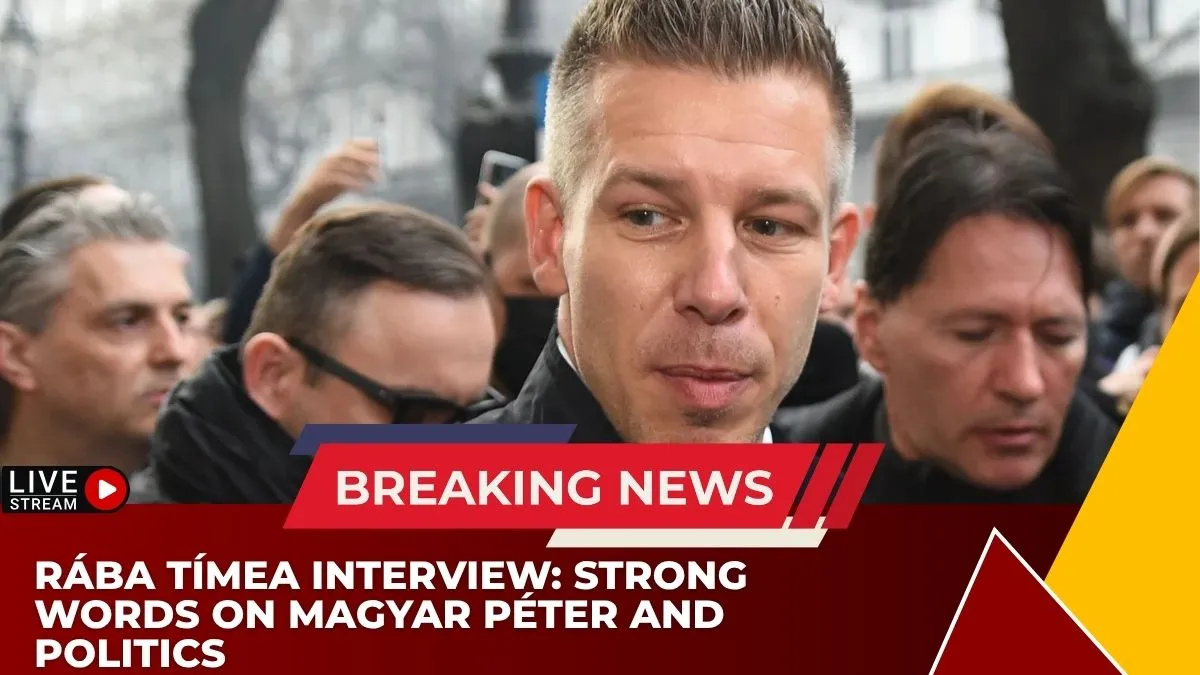
The Rába Tímea Interview has sparked widespread attention after the former model and TV presenter openly shared her political views.
In this Rába Tímea Interview, she addresses her concerns as a mother, her stance on current political issues, and her criticism of Magyar Péter.
Her remarks have generated significant debate, especially given the strong language she used to describe him and her unwavering support for the Hungarian government.
Who is Rába Tímea?
Rába Tímea is a former model and television personality who has largely stayed away from political controversies in the past. However, in this Rába Tímea Interview, she explains that circumstances forced her to speak out publicly.
She emphasized that she never imagined she would one day need to openly discuss her political beliefs. Yet, recent developments and personal concerns led her to take a clear stance, despite the backlash she has received.
Rába Tímea Interview: Why She Spoke Out
In the Rába Tímea Interview, she highlighted that her primary motivation was her role as a mother. She stated that she felt compelled to defend her children from what she described as “pro-war ambitions.”
According to her, remaining silent was no longer an option. She believed that openly expressing her views was necessary to protect her family and to stand against ideologies she disagrees with.
Despite facing aggressive criticism, she continues to stand firm in her beliefs and has not backed down from her statements.
Her Views on the Hungarian Government
During the Rába Tímea Interview, she clearly expressed support for the Hungarian government’s anti-war position. She praised its efforts to maintain peace and avoid involvement in international conflicts.
Her stance aligns with the government’s messaging, which emphasizes stability and resistance to external pressures. She described these policies as essential for safeguarding the country’s future, particularly for younger generations.
Strong Criticism of Magyar Péter
One of the most controversial aspects of the Rába Tímea Interview was her direct criticism of Magyar Péter.
She described him as:
“a person who came from nothing and is going nowhere.”
This statement has drawn significant reactions from both supporters and critics. Her remarks reflect a broader political divide, with strong opinions on both sides.
The Rába Tímea Interview brought this tension into the spotlight, making it one of the most discussed topics in recent Hungarian media.
Public Reaction and Media Coverage
The Rába Tímea Interview was widely covered by multiple outlets, including opinion pieces and follow-up articles. The response has been mixed:
- Supporters praised her courage for speaking openly despite backlash.
- Critics accused her of using harsh and unnecessary language.
- Neutral observers viewed the interview as another example of growing political polarization.
Her decision to speak publicly has undoubtedly intensified discussions around political discourse and freedom of expression.
Facing Backlash and Staying Firm
In the Rába Tímea Interview, she acknowledged the aggressive attacks directed at her following her statements. However, she made it clear that she does not intend to change her position.
She emphasized that standing by her beliefs is more important than avoiding criticism. Her resilience has become a defining element of this Rába Tímea Interview, as she continues to defend her views publicly.
The Broader Political Context
The Rába Tímea Interview comes at a time of heightened political tension. Debates around war, national policy, and leadership are becoming increasingly intense.
Her comments reflect a wider narrative where public figures are taking stronger and more direct stances. This trend is shaping political conversations not only in Hungary but across Europe.
The Rába Tímea Interview stands out as a bold and controversial moment in recent media discussions. By openly sharing her political beliefs, criticizing Magyar Péter, and supporting the government’s anti-war stance, Rába Tímea has positioned herself at the center of public debate.
Whether seen as courageous or divisive, her statements highlight the increasing role of public figures in political discourse.
Ultimately, the Rába Tímea Interview underscores how personal perspectives, especially those tied to family and national concerns, can shape powerful and sometimes polarizing narratives.