
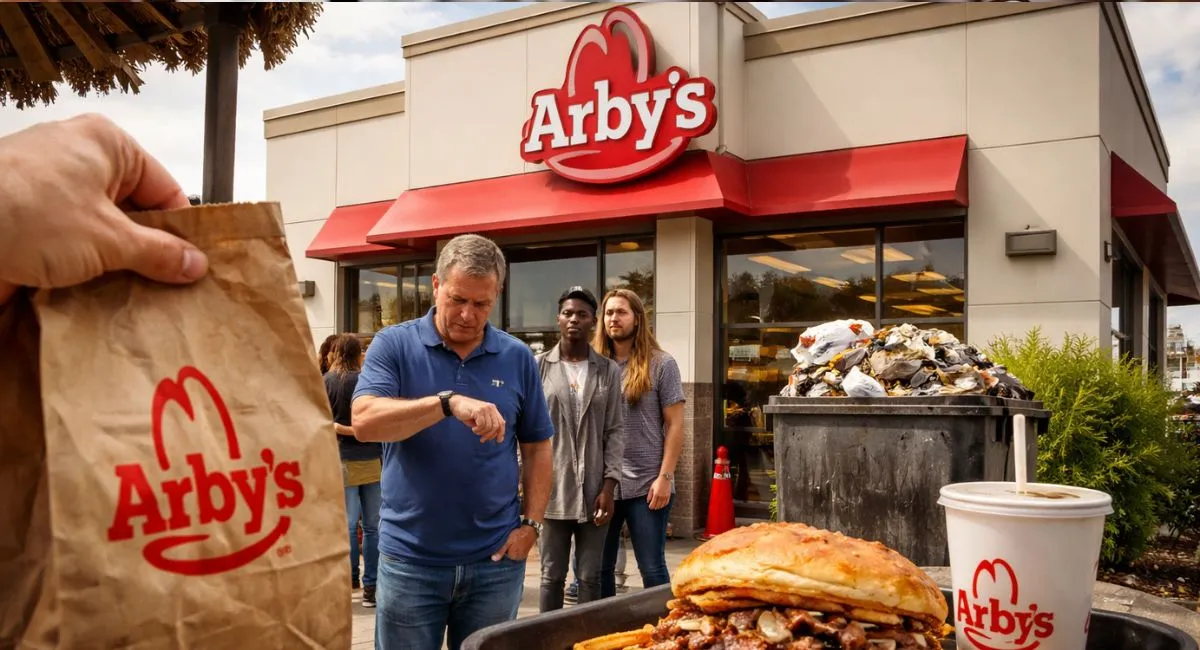
When discussing why Arby’s struggles, it becomes clear that the brand occupies a unique but complicated position in the fast food industry.
Unlike competitors that dominate with clear identities and mass appeal, Arby’s has found it difficult to generate the same level of excitement and loyalty.
While some customers appreciate its niche offerings, many others remain unconvinced, raising important questions about why Arby’s struggles to win over fast food fans.
A Brand Without Broad Appeal
One major reason why Arby’s struggles lies in its limited mainstream appeal. Competing chains have built strong, recognizable identities:
- Chick-fil-A is widely praised for its customer service and high-quality fried chicken.
- McDonald’s dominates with its versatile menu, iconic Happy Meals, and global presence.
In contrast, Arby’s doesn’t evoke the same immediate recognition or emotional connection. Its branding, while memorable, lacks the universal charm that draws in diverse customer groups. This gap helps explain why Arby’s struggles to stay relevant in a crowded market.
“We Have the Meats” – A Double-Edged Sword
Arby’s slogan, “We have the meats,” defines its identity—but also limits its reach. The heavy emphasis on roast beef and red meat creates a narrow target audience.
- Customers who love roast beef may prefer deli-quality options.
- Budget-conscious consumers might choose to make similar sandwiches at home.
- Health-conscious diners may avoid red meat altogether.
Because of this, the very slogan meant to differentiate the brand contributes to why Arby’s struggles to expand its fan base.
Changing Consumer Preferences
Another key factor behind Arby’s struggles is the shift in consumer eating habits. Today’s diners increasingly prioritise:
- Healthier menu options
- Plant-based alternatives
- Fresh, customizable meals
Arby’s traditional focus on processed meats and heavier items does not align well with these evolving trends. As a result, it risks losing relevance among younger and health-conscious audiences, further reinforcing why Arby’s struggles in modern times.
Perception Issues and Controversies
Public perception plays a crucial role in brand success, and Arby’s has faced its share of challenges. Some critics have questioned the authenticity and quality of its roast beef, even leading to allegations and legal scrutiny.
Additionally, accusations about portion sizes being reduced without corresponding price changes have damaged trust. These concerns contribute significantly to why Arby’s struggles, as negative perceptions can spread quickly in the digital age.
Weak Social Media and Marketing Presence
In today’s digital-first world, strong online engagement is essential. Many fast food giants have mastered social media marketing, creating viral campaigns and engaging directly with customers.
Arby’s, however, has a relatively subdued social presence. While it occasionally produces creative content, it lacks the consistent impact seen from competitors. This digital gap is another critical reason why Arby’s struggles to capture attention and remain top-of-mind for consumers.
Limited Menu Versatility
Menu diversity is another area where Arby’s falls short. Chains like McDonald’s offer a wide range of items catering to different tastes, including:
- Breakfast options
- Coffee beverages
- Kid-friendly meals
- Late-night snacks
Arby’s menu, by comparison, is heavily centred on meat-based sandwiches. This limited variety restricts its ability to attract a broader audience, adding to why Arby’s struggles in a highly competitive industry.
Competition in a Saturated Market
The fast food landscape is more competitive than ever. Brands continuously innovate with new products, limited-time offers, and collaborations to keep customers engaged.
Arby’s slower pace of innovation makes it harder to stand out. Without frequent menu updates or buzzworthy campaigns, it becomes easier to overlook—another clear example of why Arby’s struggles to compete effectively.
Price vs. Value Perception
Value perception is crucial in fast food. Customers expect affordability along with quality and quantity. When Arby’s is perceived as expensive relative to portion sizes or quality, it impacts customer satisfaction.
This mismatch between price and perceived value is yet another factor explaining why Arby’s struggles to retain and attract customers.
Understanding why Arby’s struggles requires looking at multiple interconnected factors: limited mainstream appeal, a narrow product focus, changing consumer preferences, and challenges in marketing and perception.
While the brand has a distinct identity, it has not evolved quickly enough to meet modern expectations.
To overcome these challenges, Arby’s would need to diversify its menu, strengthen its digital presence, and rebuild consumer trust.
Until then, the reasons behind why Arby’s struggles will likely continue to shape its position in the fast food industry.
FAQs
Why is Arby’s less popular than other fast food chains?
Arby’s is less popular because of its niche focus on roast beef, limited menu variety, and weaker brand recognition compared to competitors.
Does Arby’s have quality issues?
There have been public concerns and allegations about the authenticity and portion sizes of its roast beef, affecting customer perception.
Can Arby’s improve its popularity?
Yes, by expanding menu options, improving marketing strategies, and aligning with current food trends, Arby’s can enhance its appeal.