
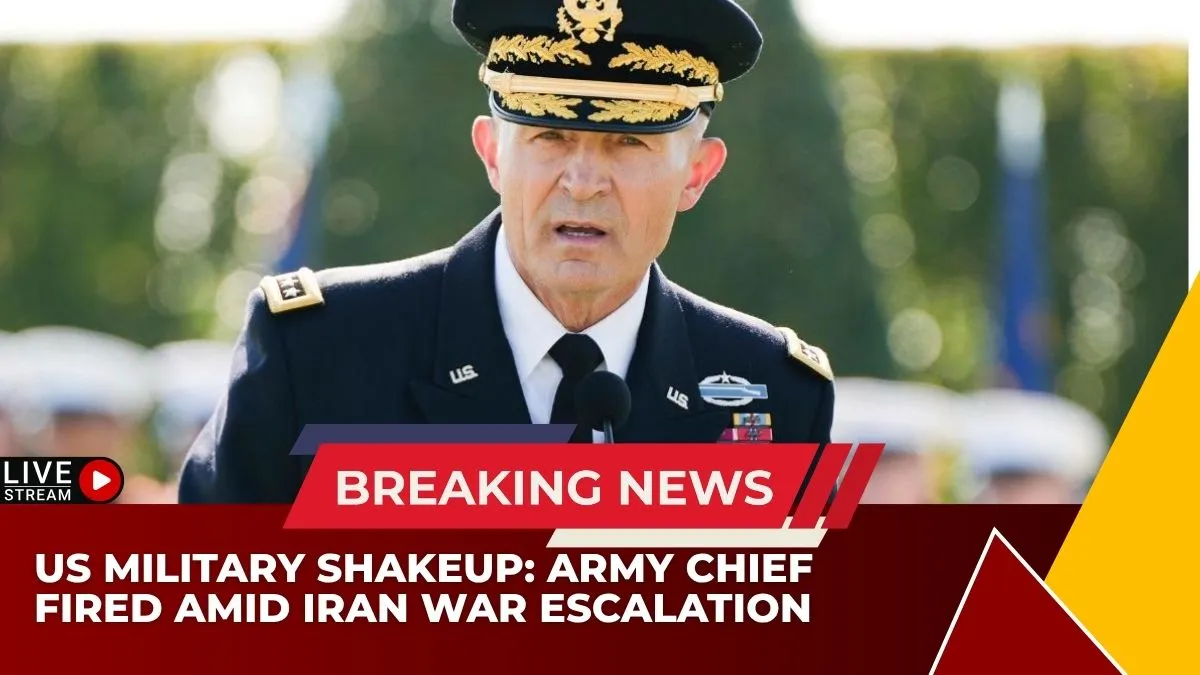
In a dramatic US Military Shakeup, Defence Secretary Pete Hegseth has removed the US Army Chief of Staff and two senior generals as tensions rise in the ongoing conflict with Iran.
The sudden decision has sparked concern within the defence community, especially given the timing during an active military engagement.
Army Chief of Staff Forced to Retire Immediately
As part of the US Military Shakeup, General Randy George was instructed to retire with immediate effect. The announcement was confirmed by Pentagon spokesperson Sean Parnell, who acknowledged General George’s decades of service.
The decision reportedly came as a surprise to senior Army officials. According to sources, George was informed during a phone call from Hegseth while attending a meeting.
Soon after, he addressed his staff, who reacted with composed professionalism despite the unexpected news.
General George had been serving as the 41st Chief of Staff since September 2023 and played a crucial role in shaping military operations and advising top defence leadership.
Two Other Generals Also Removed
In addition to George, the US Military Shakeup extended to two more high-ranking officials:
- Major General William Green Jr., who led the Army’s chaplain corps
- General David Hodne, responsible for training and modernization efforts
Their removal further underscores the sweeping nature of the leadership changes within the Army.
Timing Linked to Iran War Escalation
The US Military Shakeup comes just one day after Donald Trump addressed the nation regarding the ongoing war with Iran. In his speech, Trump indicated that the United States would intensify its military operations, despite earlier suggesting a shorter conflict timeline.
The Army, under General George, has been instrumental in deploying troops and managing advanced air and missile defence systems. These systems are critical to ongoing operations, making the timing of leadership changes particularly sensitive.
Internal Tensions and Political Dynamics
Behind the US Military Shakeup, there appear to be underlying tensions within defence leadership. General George had a close working relationship with Army Secretary Dan Driscoll, a figure reportedly viewed by Hegseth as a rival influence.
Additionally, George’s previous role as senior military assistant to former Defence Secretary Lloyd Austin during the Biden administration may have contributed to strained relations with the current leadership.
While such roles are traditionally non-political, proximity to previous administrations can sometimes influence perceptions within changing political environments.
Successor Likely to Step In
Following the US Military Shakeup, General Chris LaNeve is expected to step in as acting Chief of Staff. LaNeve, who currently serves as the Army’s vice chief, has a strong military background, including leadership roles in South Korea and the 82nd Airborne Division.
LaNeve gained attention early in Trump’s presidency when he addressed the Commander-in-Chief during an official event, earning praise for his direct and confident demeanour.
His appointment signals a possible shift in leadership style and priorities within the Army during this critical period.
Military Community Reaction
The US Military Shakeup has raised concerns among defence officials, many of whom were caught off guard by the sudden announcement. One official described the move as lacking thorough planning, particularly given the ongoing conflict.
Removing a key member of the Joint Chiefs during wartime is an uncommon step, and it has led to questions about the strategic implications for military operations.
General Randy George’s Career Overview
General George’s career spans decades of service. Commissioned from the US Military Academy at West Point in 1988, he served in multiple leadership roles, including commanding I Corps and acting as a senior advisor at the Pentagon.
His experience in both operational and strategic roles made him a central figure in Army leadership, especially during complex global engagements.
The US Military Shakeup represents a significant shift in American military leadership at a critical moment in the Iran conflict.
The abrupt removal of top generals, including the Army Chief of Staff, highlights internal tensions and evolving priorities within the defense establishment.
While leadership changes are not uncommon, their timing during an active war raises important questions about continuity, strategy, and morale.
As new leaders step in, the effectiveness of these decisions will likely be judged by their impact on ongoing military operations and national security outcomes.